
 Image 1 of 2
 Image 2 of 2
Every AI job search prompt helps you apply. This one gets you to the offer letter.
I left a fifteen year career in HR and had my first cybersecurity job six months later. A referral got it for me. The contractor needed people, they trusted the friend who said my name, and I had an offer letter by the end of that week.
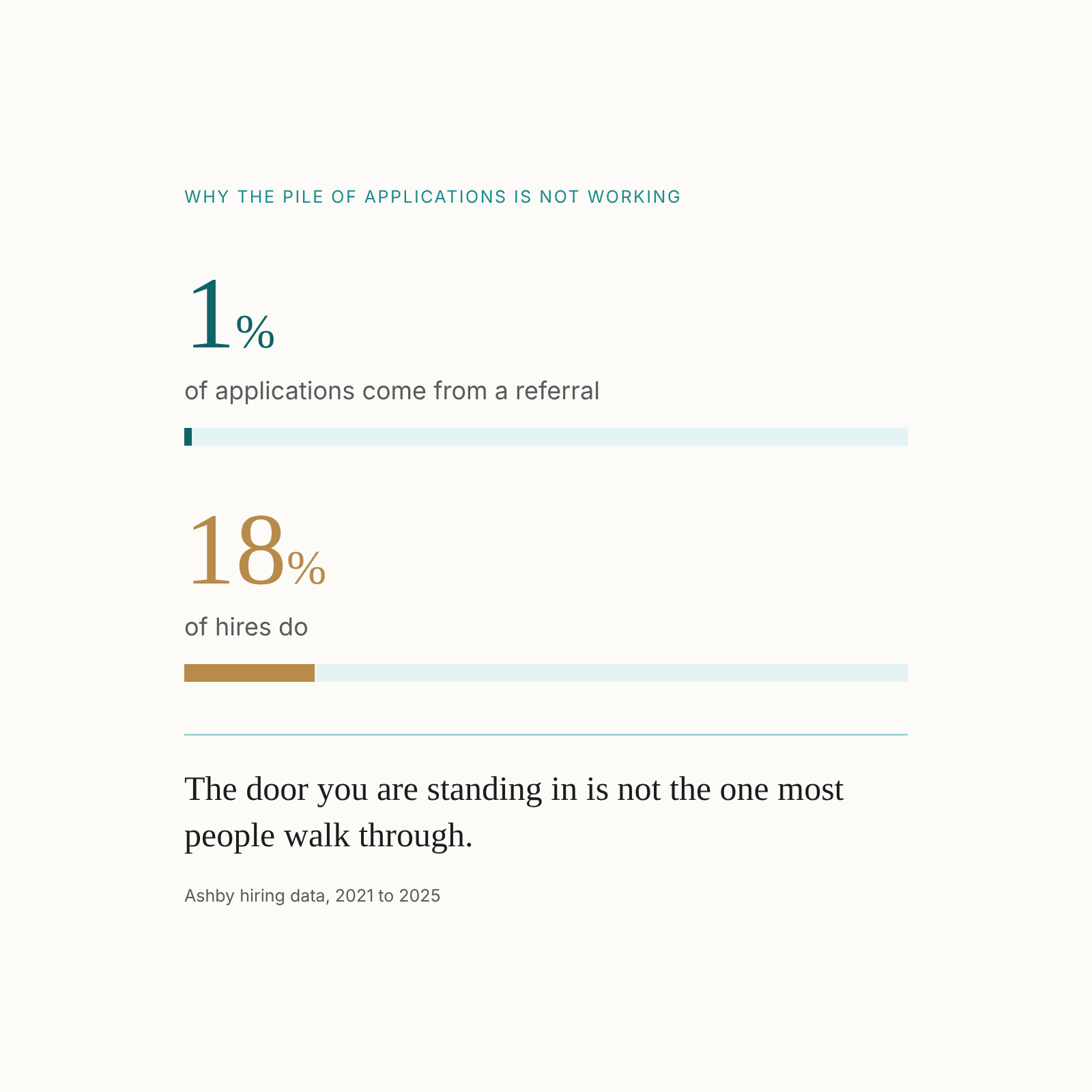
That is what a referral actually does. It does not move you up in the pile. It takes you out of the pile. Nobody has to decide whether you are a risk, because somebody they already trust has decided that for them.
Hundreds of people apply for a single opening now. Nobody reads to the bottom of that stack. Being higher in the stack is not the answer.
You can find free job search prompts online, and they’re not bad. They score you against a posting, tune your resume for the scanner, run a mock interview, and draft a decent message to a hiring manager who has never heard of you. All of that is work on the application. This is work on the thing that actually ends in an offer.
What this prompt pack does
Five prompts that run in order. Each one hands the next what it needs, so you tell your story once instead of pasting your resume into six different windows. By the end you are holding four things
A packet you hand to the person who says yes, so they can vouch for you well instead of saying “she’s great, take a look”
The people who can hand it over, including the ones who have nothing to do with your field
A short list of places where one of those people already has a door
A clear line between what you can prove and what you cannot, so nothing in the packet falls apart later
What makes it different
It starts before the job posting. Most prompts open with “target role, insert your title.” This one opens with your actual history and tells you which lanes your evidence can carry, even when that is not the lane you were hoping for.
It will not name a person you did not name first. No recruiters, no “someone on their talent team,” nobody you have to introduce yourself to.
There are no quotas. If six places are worth your time, you get six. Prompts that demand fifteen will give you fifteen, and you will spend your week writing to nine strangers.
It is allowed to tell you something is thin.
This was run before it was sold
I ran these prompts on my own job search after I was let go. Then I ran them on people whose histories look nothing like mine, to find the prompts that only worked for me. The guide includes what broke and what I changed, because you should know what you are buying.
What you get
A 23 page PDF. Five prompts written out and ready to copy, a plain explanation of what to do with what each one gives you, and a one page checklist you can print and keep next to you.
What it will not do
It will not get you a job on its own. It will not write a resume that claims things you cannot back up. It will not find you strangers to cold message.
You need an AI tool you can paste into. The guide shows you how to pick one, and three of the common ones are free.